Compliance vs. Security: Why the Bare Minimum Isn't Enough
Compliance certifications don't equal security. 2026 DBIR data, SEC enforcement, and what to test beyond audit scope to actually reduce real risk.

Here’s an uncomfortable truth: just because you’re compliant doesn’t mean you’re secure.
Many organizations treat compliance as the finish line. Achieve the certification, pass the audit, check the box. But compliance frameworks represent minimum standards, not complete protection. They’re designed to establish baselines, not to defend against sophisticated adversaries.
What’s Changed Since 2024
When this post first ran, the compliance vs security gap was an editorial argument. Since late 2024, regulators, insurers, and attackers have all turned it into a measurable operational problem.
The SEC stood up its Cyber and Emerging Technologies Unit in February 2025 and has now settled multiple cybersecurity disclosure cases totaling more than $8 million in penalties. The four-business-day Form 8-K materiality requirement is no longer a hypothetical filing obligation; companies that minimized or downplayed cyber incidents have been fined for it. Cybersecurity disclosure is being enforced like financial disclosure now. (See Cooley’s SEC enforcement review for the case-by-case detail.)
The threat data caught up to the argument too. The 2026 Verizon DBIR, covering breaches from November 2024 through October 2025, found that third-party involvement was a factor in 30% of breaches, up from roughly 15% the year prior. Vulnerability exploitation jumped to 20% of breaches and is now the second most common entry point, ahead of phishing. Compliance scopes draw a perimeter around defined systems. Attackers routed through the vendors and the unpatched edge devices that compliance scopes do not cover.
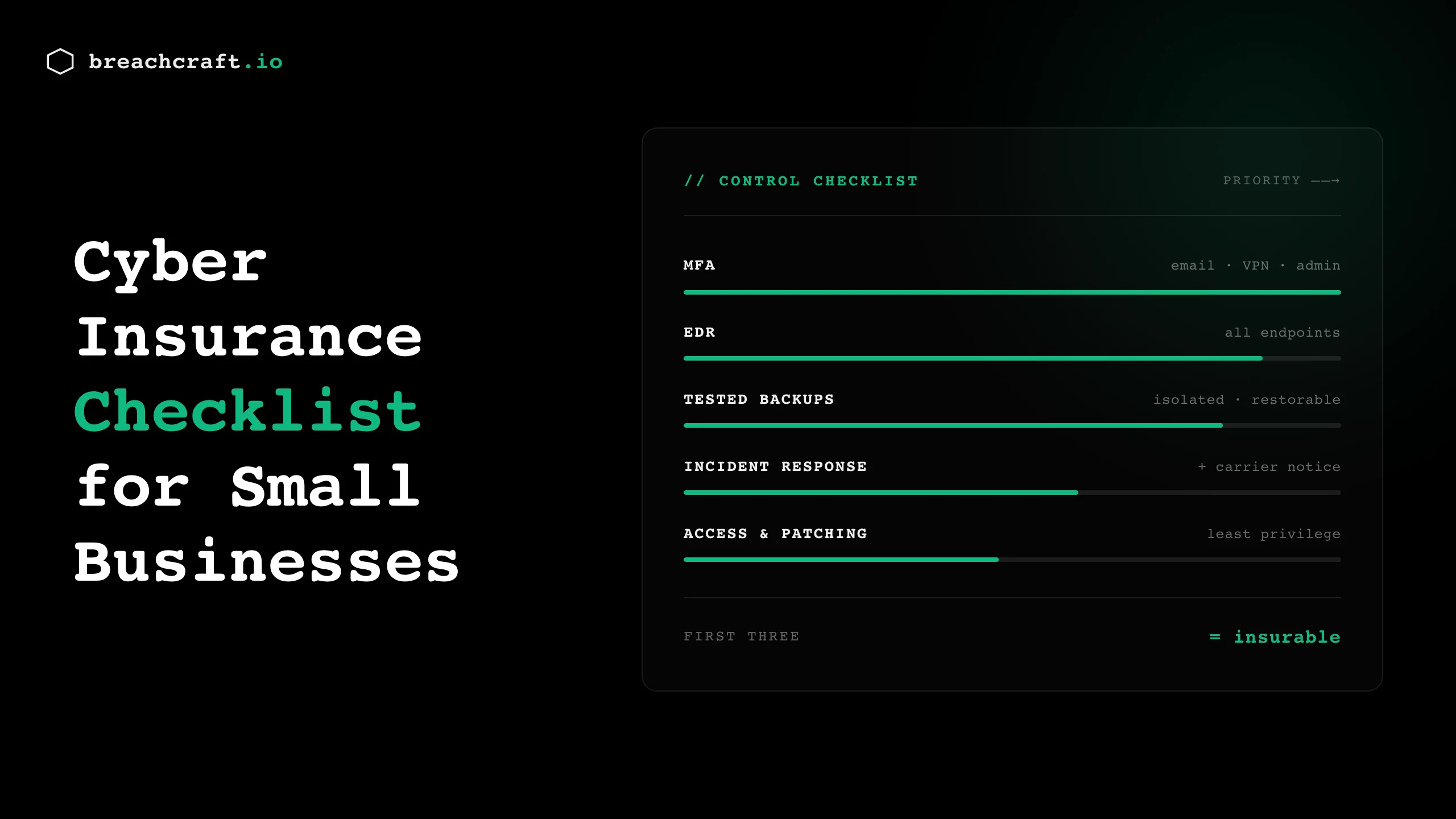
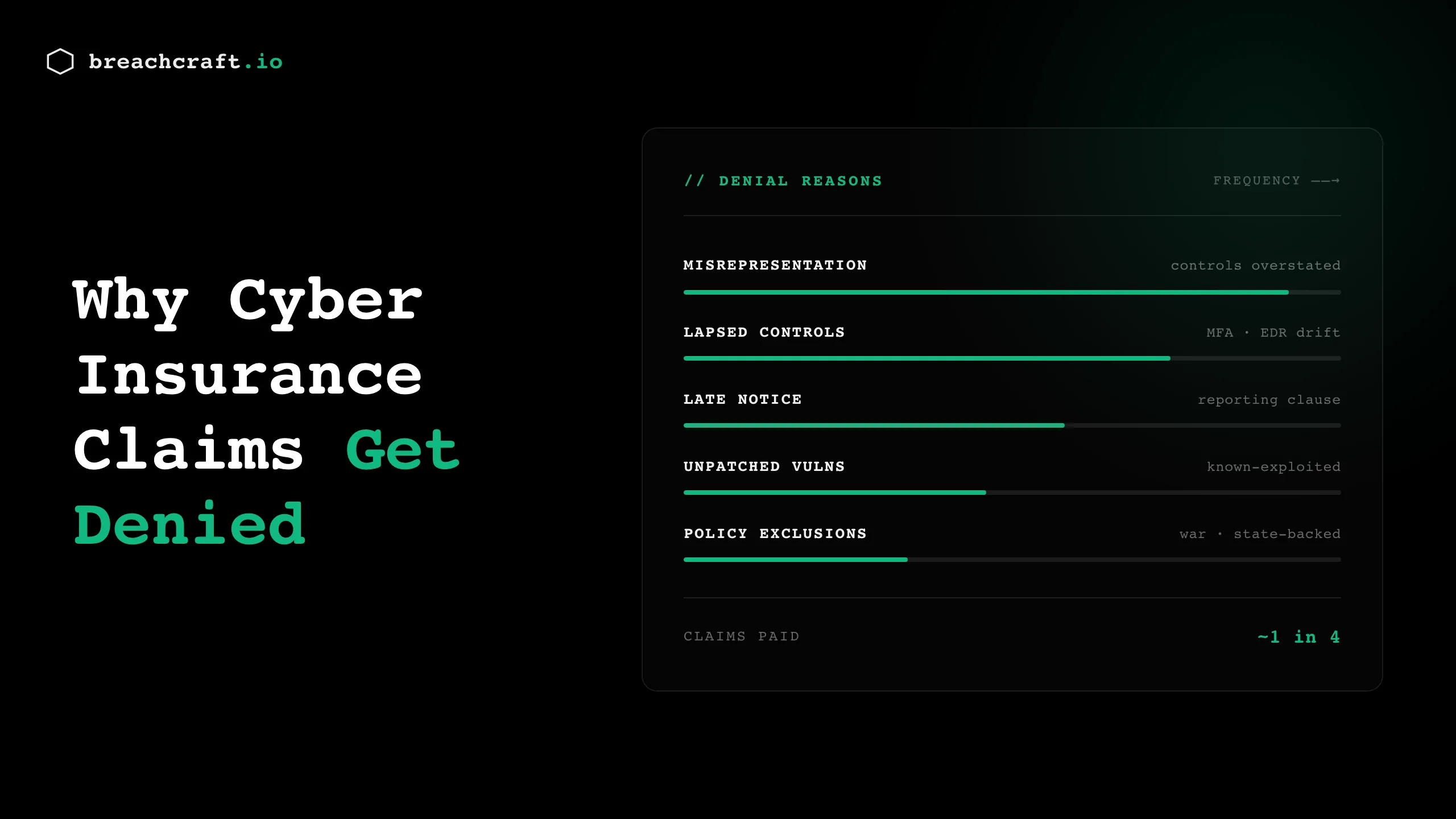
Cyber insurance underwriting made the same shift. Carriers used to ask “do you have MFA, EDR, and an IR plan?” Now they ask whether those controls were actually enforced at the moment of the incident, with proof. A claim filed against a policy that promised MFA on every account, against an incident that came in through the one account where MFA was disabled for convenience, gets denied. We covered the operational implications in our cyber insurance requirements post.
The pattern across all three is the same. Saying you have controls is not the same as having them work.
The Compliance Trap
Compliance requirements exist for good reasons. They force organizations to implement fundamental controls they might otherwise neglect. They create accountability and provide frameworks for improvement.
But they’re also backward-looking. By the time a vulnerability becomes common enough to appear in compliance requirements, attackers have been exploiting it for years. Compliance frameworks evolve slowly; threat actors adapt constantly.
Consider PCI-DSS, one of the more prescriptive frameworks. Organizations achieve PCI compliance and suffer breaches regularly. The compliance certification didn’t prevent the attack; it just verified that certain baseline controls existed at assessment time.
Where Compliance Falls Short
Scope Limitations
Compliance assessments focus on defined scopes. PCI-DSS covers cardholder data environments. HIPAA addresses protected health information. Attackers don’t limit themselves to your compliance scope.
Point-in-Time Snapshots
Audits capture your security posture at a specific moment. Between audits, configurations drift, new vulnerabilities emerge, and employees make changes that introduce risk.
Checkbox Mentality
When compliance is the goal, organizations optimize for passing audits rather than reducing risk. Controls exist on paper but may not function effectively in practice.
Minimum Viable Security
Meeting requirements means implementing what’s required, nothing more. Requirements represent floors, not ceilings. Determined attackers target organizations that mistake the floor for adequate protection.
Beyond the Checkbox
Thorough Penetration Testing
Compliance often requires vulnerability scanning, but genuine security demands human-driven penetration testing. Scanners find known vulnerabilities; skilled testers find the unexpected paths attackers actually use, including the chains where three modest findings combine into one critical kill chain a scanner would never flag.
Rotating Assessment Vendors
Using the same assessors year after year creates blind spots. Fresh perspectives identify issues that familiarity obscures. Your auditor relationship may be comfortable, but comfort isn’t security.
Expanded Scope
Extend testing beyond compliance boundaries. Include cloud environments your compliance scope doesn’t cover. Test SaaS applications. Evaluate shadow IT. Attackers won’t respect your scope limitations.
Social Engineering Assessment
Most compliance frameworks barely address the human element. Phishing simulations, pretexting attempts, and physical social engineering reveal vulnerabilities no technical control can address.
Physical Security Testing
Can someone tailgate into your building? Access sensitive areas with a fake badge? Walk out with unencrypted laptops? Physical security often receives minimal attention in compliance assessments.
Incident Response Validation
Having an incident response plan satisfies compliance requirements. Testing that plan through tabletop exercises reveals whether it actually works when 3 AM alerts interrupt your team’s sleep.
Gap Assessment Against Real Threats
A gap assessment measured against your actual threat model, not just framework requirements, often surfaces what compliance audits miss. We’ve run gap assessments where the NIST CSF score looked decent but the real risk was concentrated in three controls the framework didn’t weight at all. Same audit score, materially better security posture.
Strategic Leadership
For organizations without dedicated security leadership, Virtual CISO services provide the strategic guidance needed to move beyond compliance-driven security. If you are weighing the investment, see what a virtual CISO actually costs. A vCISO helps you:
- Develop risk-based security programs rather than compliance-driven checklists
- Prioritize investments based on actual threats, not just audit findings
- Build security culture throughout the organization
- Communicate security posture to boards and executives in business terms
The Right Mindset
Compliance should be a byproduct of good security, not the goal itself. When you build a mature security program focused on genuine risk reduction, compliance certifications follow naturally.
The question isn’t “Are we compliant?” The question is “Are we secure?” The answer to the second question determines whether the first one matters.
Related Reading
- What Is a Gap Assessment? Mapping Security Posture to Industry Standards
- CIS Top 18 Gap Assessment: A Roadmap to a Mature Security Posture
- Cyber Insurance Requirements in 2026: What Carriers Actually Require
Taking Action
If your security program exists primarily to satisfy auditors, it’s time for a different approach. Start with honest assessment of your current state, measured not against compliance requirements, but against actual threats facing your organization.
Ready to move beyond compliance-driven security? Contact Breach Craft to discuss how we can help you build genuine security capabilities.